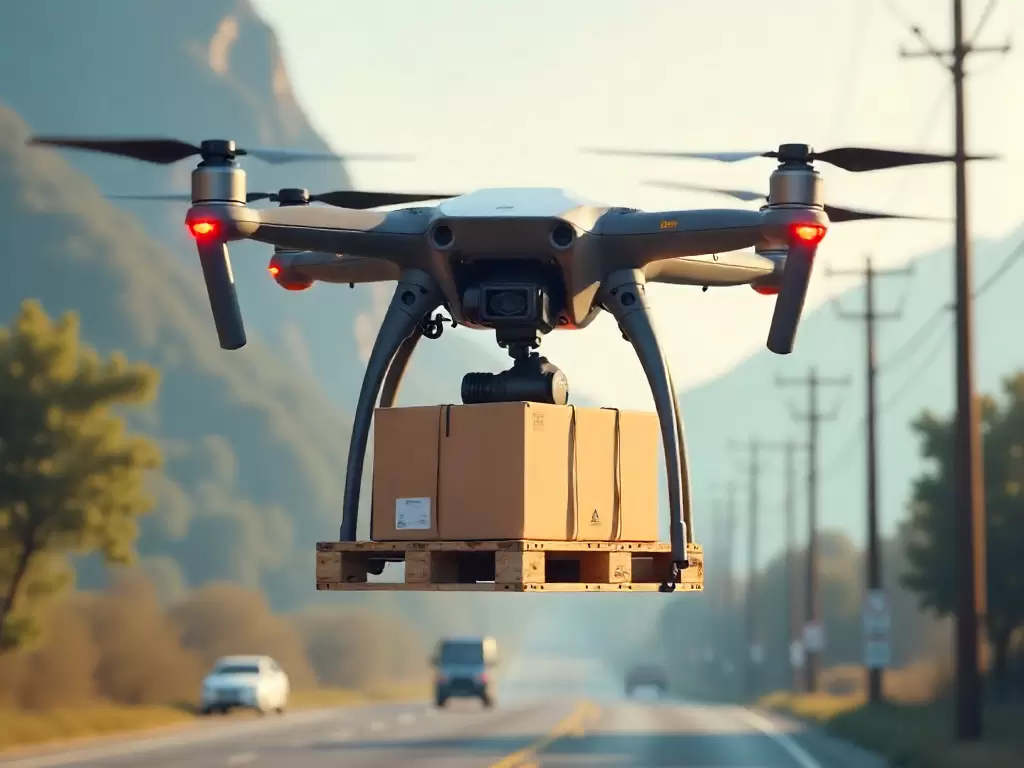
Do hydrogen-powered drones improve short haul logistics in the future? – An analysis based on the HydroFly Project.
As global demand for sustainable transportation grows, companies and researchers are looking for cleaner, more efficient solutions – both on the ground and in the air. The HydroFly project explores how hydrogen-powered drones could transform short-distance logistics by offering longer flight times, faster refuelling, and a nearly emission-free energy system compared to battery-powered drones. Hydrogen fuel cells emit only water vapour, allowing drones to fly more sustainably. [1],[2]
To better understand public perception, a survey was conducted, focusing on awareness, acceptance, safety concerns, and the expected benefits of hydrogen-powered aircraft. A total of 94 participants from both Indonesia and Switzerland answered the survey online.
Survey Results and Analysis
How high is the public awareness and acceptance of hydrogen-powered drones?
The survey results show that the public awareness of hydrogen-powered drones remains relatively low. A clear majority reported that they had never heard of hydrogen-powered drones or aircraft before.
Despite this limited awareness, attitudes toward the concept remain notably positive. Participants widely agreed that sustainable aviation solutions are becoming increasingly important. More than half of the respondents indicated that they would accept hydrogen-powered drones operating over residential areas, suggesting growing openness toward environmentally friendly aerial mobility.
While Swiss respondents often linked acceptance to environmental sustainability and innovation, participants from Indonesia more frequently associated acceptance with improved access to remote areas and faster emergency response.

What benefits do people associate with the HydroFly concept?
Benefits of hydrogen-cell fuelled drones: [1],[2]
- Low emissions and clean environmental footprint
- Greater flight range than battery-powered drones
- Fast refuelling times
- Strong performance for logistics applications
Participants see hydrogen as a promising solution to the limitations of electric drones, especially concerning flight duration and payload capacity. Swiss respondents primarily emphasised efficiency gains, emissions reduction, and technological advancement, whereas participants from Indonesia highlighted endurance, reliability, and independence from ground infrastructure.

What concerns do people associate with the HydroFly concept?
Main concerns mentioned were:
- Safety considerations related to hydrogen storage and transport
- Legal and regulatory issues for drones
- Infrastructure requirements, such as refuelling stations
- Potential costs associated with adopting the technology
Although the majority rated hydrogen as “safe” or “somewhat safe”, a small but notable minority still showed safety concerns. Overall, participants believe that Hydrofly has strong potential, provided that the technical, legal, and infrastructural challenges are addressed.
Logistical potential of hydrogen-powered drones in short-haul applications
Based on both the technology and the survey responses, hydrogen-powered drones appear to be a promising solution for short-haul logistics. A large majority of participants rated the logistical potential very positively, relating on key usage such as:
- Medical deliveries
- Industrial supply chains
- Serving remote locations
- Emergency logistics
For respondents from Switzerland, high ratings were often associated with medical logistics and efficiency-driven applications, whereas participants from Indonesia linked the same ratings to disaster response, inter-island connectivity, and access to isolated communities.

What potential do hydrogen-powered drones offer for Indonesia?
For countries like Indonesia, hydrogen-powered drones offer strategic value because they directly address geographic, infrastructural, and disaster-response challenges. As an archipelagic nation with thousands of islands, mountainous terrain, and limited road access in outer regions, Indonesia struggles with short-haul logistics where speed, reach, and reliability are critical. Hydrogen-powered drones, with their long endurance and higher payload capacity, can connect isolated communities without relying on damaged or non existent ground infrastructure.
This potential becomes especially clear in disaster contexts such as the recent Aceh floods. Flooding cut off roads, disrupted communications, and delayed aid delivery to remote villages. Hydrogen-powered drones could provide persistent aerial mapping to monitor flood progression, locate stranded residents, and assess damage in real time. These are tasks battery-powered drones struggle to sustain due to limited flight time. Their ability to stay airborne for hours allows continuous situational awareness rather than fragmented data from repeated short flights.
In logistics, hydrogen drones can support emergency supply chains by delivering medical kits, clean water, communication devices, and food to flood-isolated areas. Faster refuelling compared to battery recharging enables rapid turnaround, making them suitable for repeated supply runs during critical response windows. This shifts drones from being supplementary tools to becoming reliable short-haul logistics assets in emergencies.
Beyond disasters, hydrogen-powered drones align with Indonesia’s long-term development and sustainability goals.[6] They offer a low-emission logistics solution for remote healthcare delivery, industrial monitoring, and inter-island transport while reducing dependence on fuel-intensive helicopters. However, implementation for drones may still be a challenge in non-rural areas of Indonesia, as the current infrastructure may obstruct the path for low-altitude aerial devices such as drones. This limits usage of drones to areas such as IKN (Indonesia’s new capital), as it is the first area in Indonesia to implement underground cable infrastructures.
However, with proper investment in safety standards, regulation, decentralised refuelling infrastructure, and dedicated low-altitude airspace management, these limitations can be gradually overcome. Clear regulatory frameworks would enable safe operations over populated areas, while modular or mobile hydrogen refuelling systems could support deployment beyond major urban centres. In parallel, urban planning that keeps low-altitude aerial devices in mind, like the ones being explored in IKN, can serve as a model for future smart cities across Indonesia. If these conditions are met, hydrogen-powered drones could evolve from niche, disaster-specific tools into a resilient national logistics layer, strengthening Indonesia’s connectivity, disaster preparedness, and sustainable development in the long term. [6], [7]
If you still want to participate in our survey you can find the link below:
HydroFly: Hydrogen-Powered Drone Network Evaluation Form
Conclusion
Jan’s Conclusion
Working on this project helped me understand both the technical and social aspects of hydrogen-powered drones. A challenge was that many people knew very little about hydrogen technology, but the survey helped highlight how positive their attitudes still are. It was also difficult to find enough participants for my survey, because it is a difficult project, although it helped me to identify clear patterns in acceptance and potential.
Overall, the project shows that Hydrofly and similar concepts represent a realistic and innovative future direction for sustainable air mobility.
Hilmi’s Conclusion
While my involvement in this project is limited, I gained valuable insights into the future of mobility technology, particularly in the realm of hydrogen power. As an avid car enthusiast, I had always considered hydrogen a potential solution that lacked a distinct niche. However, the implementation of hydrogen technology in existing mainstream vehicles like cars, trucks, and buses revealed its limitations in meeting the specific requirements of these modes of transportation. This revelation opened my eyes to an alternative mode of transport with significant potential, and it reinforced my belief that hydrogen-powered technologies still have its piece to play.
Reflection
Jan’s Reflection:
Working on this project in an intercultural context was both challenging and valuable. One of the main difficulties was finding motivated and interested partners across different countries. In addition, coordinating meetings and collaboration was complicated by the time zone differences between Switzerland, Indonesia, and India.
However, communication worked well overall, especially through the website’s messaging system, which allowed clear and efficient exchanges despite the distance. Another challenge was integrating new participants into an already ongoing project, which required additional explanation and coordination.
Overall, this experience strengthened our communication skills and highlighted the importance of flexibility, clear digital communication, and cultural awareness in international collaboration.
Hilmi’s Reflection:
Participating in this project gave me a meaningful experience in intercultural collaboration. Working with people from different countries and backgrounds helped me see problems and solutions from new perspectives, which I found very valuable for my personal growth.
At the same time, the program felt uncertain at several points. My classmates and I often felt unsure about what steps to take next, and the overall direction was not always clear. I also experienced a group being dissolved, which led me to join this team at the last minute. That situation was confusing and challenging, especially under time pressure.
Communication was another difficulty. Differences in time zones, limitations of the project website, and varying cultural communication styles sometimes caused delays and misunderstandings. These moments required extra patience and clarification to keep the collaboration moving forward.
Overall, despite the challenges, I see this project as a valuable learning experience. If I had known from the beginning what I know now, this project could have been an even stronger platform to organise and explore ideas more deeply, and turn abstract interests into something more structured and impactful.
Authors
Jan Joho, Switzerland
Lalu Hilmi Azri Dayana, Indonesia
(Reviewed by Jael Locher)
Sources
[1] Hydrogen-powered Motors 1 , (wikipedia.org), August 2025
[2] Hydrogen-powered Motors 2 , (man.eu), 2025
[3] Hydrogen Fuel cells , (reneenergy.com), July 2025
[4] ChatGPT for specific Information , (OpenAI), December 2025
[5] Featured image , (freepik.com), January 2026
[6] Indonesia’s long-term development and sustainability goals, (gggi.org), June 2025
[7] IKN Nusantara’s focus on future-oriented energy infrastructure, (Antara), May 2024
On-topic posts on dontwastemy.energy
☷ See the project teams here »
☵ Some words about the contributions »
☴ Our sponsors and partners » (the-horse.education)
Hi Hilmi and Jan, the article deserves strong support and appreciation for addressing an emerging and highly relevant topic in sustainable logistics. It successfully brings attention to hydrogen-powered drones at a time when alternative energy solutions for aviation and delivery systems are urgently needed. The clear narrative, accessible explanations, and integration of public perception make the discussion engaging and meaningful beyond a purely technical audience.
Particularly commendable is the effort to connect technological innovation with real-world contexts, including societal acceptance and regional challenges. This forward-looking perspective strengthens the article’s contribution and positions it as a valuable starting point for further academic research, policy discussion, and pilot implementation. Overall, the work reflects thoughtful insight, relevance, and a constructive vision for future clean-energy logistics.