Developing real aviation discipline through AI enhanced flight simulation.
What is flight simulation?
According to the Oxford Advanced Learner’s Dictionary, a flight simulator is a device that creates the same conditions as those that exist when flying an aircraft, used for training pilots. Most flight simulators are used primarily for flight training. The simplest simulators are used to practice basic cockpit procedures, such as processing emergency checklists, and for cockpit familiarisation. [1]
Our experience
Can a flight simulator with AI feedback shape how future pilots think and act? Our interviews suggest, that it can become more than just a visual experience.
To better understand how flight simulation can support the process of learning how to fly in Indonesia, we conducted interviews with two individuals, who have different backgrounds in aviation. Their insights help explain how simulation, technology, and real aviation discipline intersect in the learning process.
We collaborated with a student team from Switzerland who looked into an engine run-up simulator. Read their contribution Engine run-Up here!
Interview with Bhagas
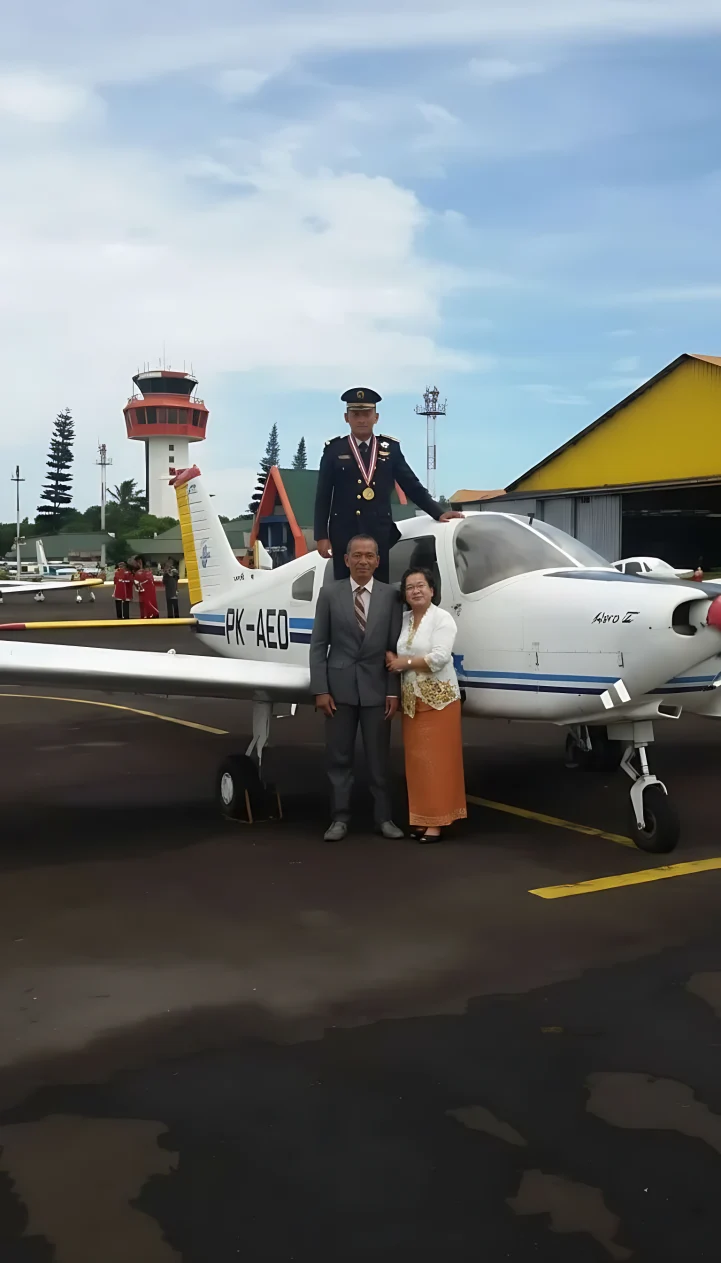
Bhagas, a licensed pilot who studied at the Indonesian Aviation College and is currently working at PT Weststar Aviation Indonesia, shared his experience using flight simulators during his professional training. He explained that aviation is built on people and strict regulations, requiring pilots to master flight principles, meteorology, health standards, and aviation laws. Bhagas has used Frasca and Redbird flight simulators, which played a crucial role in his training, especially for practicing emergency situations such as engine fires and extreme weather conditions, that cannot be safely conducted in real aircraft. He also emphasised, that AI feedback should prioritise flight techniques, potential aircraft damage, and human error, while reinforcing discipline, punctuality, and attention to detail.
What are the most important basic principles for beginners to understand when learning about flight?
Bhagas: The aviation industry is built on aviation personnel and regulations. Pilots must learn basic flight principles, meteorology, health standards, and aviation regulations or laws as a foundation.
If AI provides feedback on flying mistakes, what should be prioritised for correction?
Bhagas: Flight techniques, potential aircraft damage, and human error should be prioritised.
What real-life flight habits or mindsets should be applied even when learning through
simulation?
Bhagas: Discipline, punctuality, and attention to detail are essential habits that should always be applied.
Where did you study to obtain your pilot license, and where are you currently working?
Bhagas: I studied at the Indonesian Aviation College and am currently working at PT Weststar Aviation Indonesia.
Have you ever used a flight simulator during your flight training?
Bhagas: Yes, I used Frasca and Redbird flight simulators during my training.
Did the use of simulators contribute to your learning process? If yes, how?
Bhagas: Yes. Simulators were very influential because some emergency training scenarios, such as engine fires and extreme weather, can only be safely practiced in a simulator.
Interview with Ariel
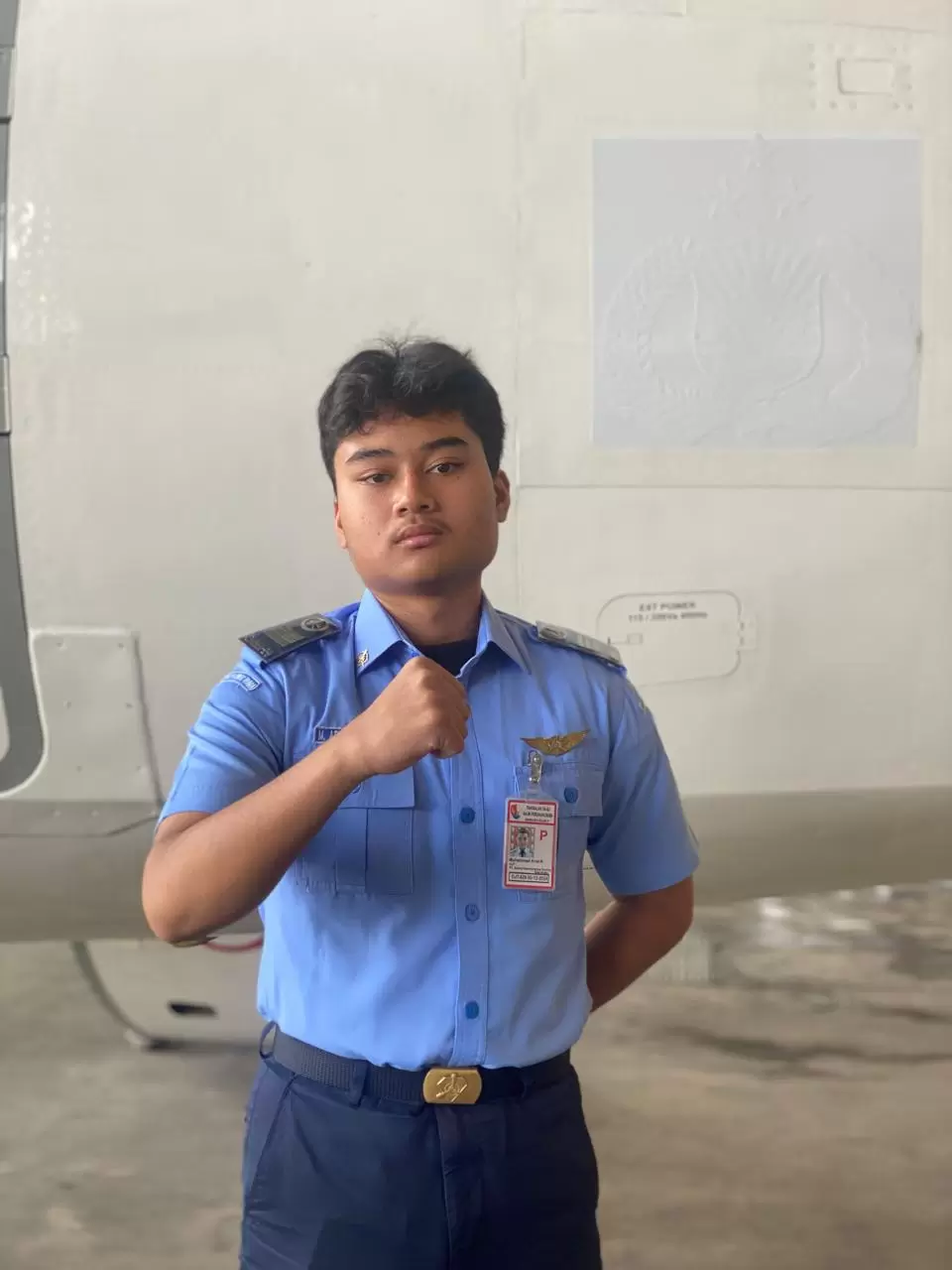
In contrast, Ariel is an aviation enthusiast and a student of the Airframe Powerplant program (smkpdirghantara.sch.id) at SMKN 29 Jakarta (smkn29jkt.sch.id), who later continued his studies in Mechanical Engineering at Jakarta State Polytechnic. Although he has not yet used a flight simulator, Ariel highlighted that understanding physics is essential in aviation. According to him, concepts such as drag, weight, thrust, and lift, along with knowledge of aircraft components and instruments, form the foundation of safe flight.
He also believes, that AI supported simulation should focus on correcting the most critical mistakes during key flight phases such as takeoff, cruising, and landing.
Ariel added, that respecting regulations and procedures is a mindset that applies to all vehicles, and should be maintained even in a simulated environment.
What are the most important basic principles for beginners to understand when learning about flight?
Ariel: The principles of physics are very influential in aviation, especially in understanding the forces acting on an aircraft. Concepts such as drag, weight, thrust, and lift, as well as knowledge of aircraft components and instruments, are essential before flying.
If AI provides feedback on flying mistakes, what should be prioritised for correction?
Ariel: The most critical mistakes should be prioritised, especially those occurring during key flight phases such as takeoff, cruising, and landing.
What real-life flight habits or mindsets should be applied even when learning through
simulation?
Ariel: Following rules and regulations consistently is essential to prevent unwanted losses, even in simulated environments.
Where did you study aviation, and could you explain your educational background?
Ariel: I studied at SMKN 29 Jakarta, where I learned the basics of aircraft maintenance, inspection, and servicing. The Airframe Powerplant major focuses on aircraft structures and engines, including measurements, calculations, inspection procedures, servicing, welding, hydraulic and electrical systems, composite manufacturing, and riveting. I later continued my studies in Mechanical Engineering at Jakarta State Polytechnic.
Have you ever used a flight simulator during your education or training?
Ariel: No, I have not used a flight simulator during my education or training.
Do you think flight simulators are beneficial for learning? If yes, how?
Ariel: Yes. Flight simulators are very useful because they allow learners to experience conditions that are close to real flight. They are important for evaluation and preparation before actual flight training.
These insights encourage us to develop a project, that is not only a simulator-based learning experience, but an AI supported training platform, that builds discipline, safety awareness, and a real aviation mindset long before learners leave the ground.
Reflection
This project helped us better understand the aviation world, the role of flight simulation in learning, and how AI functions within simulators.
It also gave us insight into intercultural collaboration by requiring us to work with people from different cultural backgrounds and understand their differences.
Authors
Dharma Prasetyo Jati
Diandra Yahya Risky Islamy
Dezra Athalla Arfaruno
Azka Pradipta Anagi
(reviewed by Jael, THE ! ambassador)
Sources
[1] flight simulator noun (oxfordlearnersdictionaries.com)
[2] Our interview results (PDF)
[3] See our slides from the Conference
On-topic posts on dontwastemy.energy
Our experience with an Engine Run-Up Simulator
☷ See the project teams here »
☵ Some words about the contributions »
☴ Our sponsors and partners » (the-horse.education)
Nice insight!
I really like the idea of an AI-supported training platform for current and future pilots! I think it could be very helpful in improving flight safety and perhaps even shortening the training pathway.
I hope you find a way to create a prototype and secure funding!
I hope we can secure funding locally and from other nations too !