This idea originated from piles of books used by students at school that were no longer needed because they had moved up a grade. And most of the time, students start taking notes in their new classes using new books.
This has led to a phenomenon where a large number of used books are no longer used but are still stored in cupboards or warehouses. Additionally, the rising cost of books makes it difficult for low-income families to provide books for their children’s school needs.
Based on this issue, we had the idea to recycle used paper into books that could be sold at affordable prices. And we have already started doing so.
Here are the steps:
- Collect unused or used books/paper
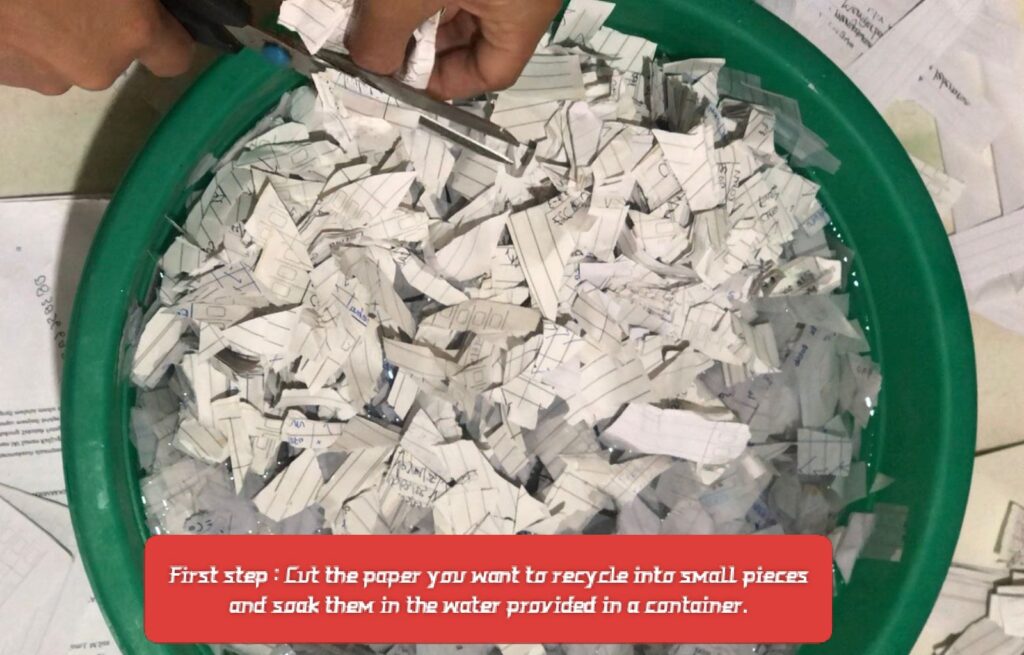
- Cut the paper into small pieces
- Soak the paper in water for about 2 hours until it becomes soft
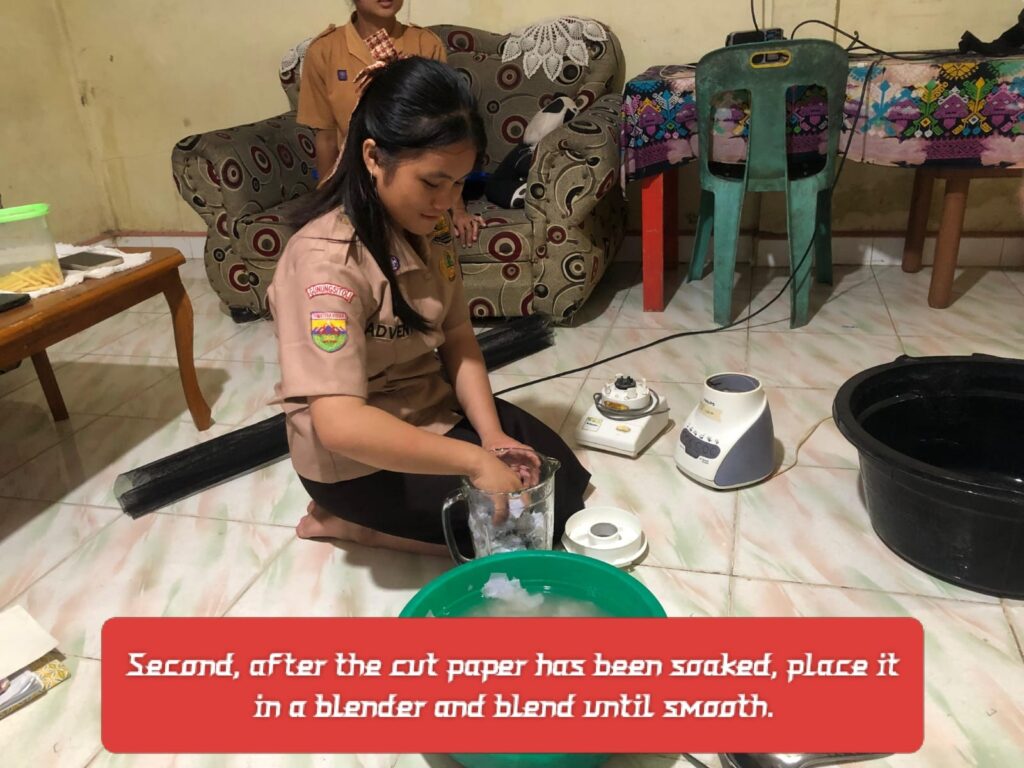
- Prepare a blender to crush the paper
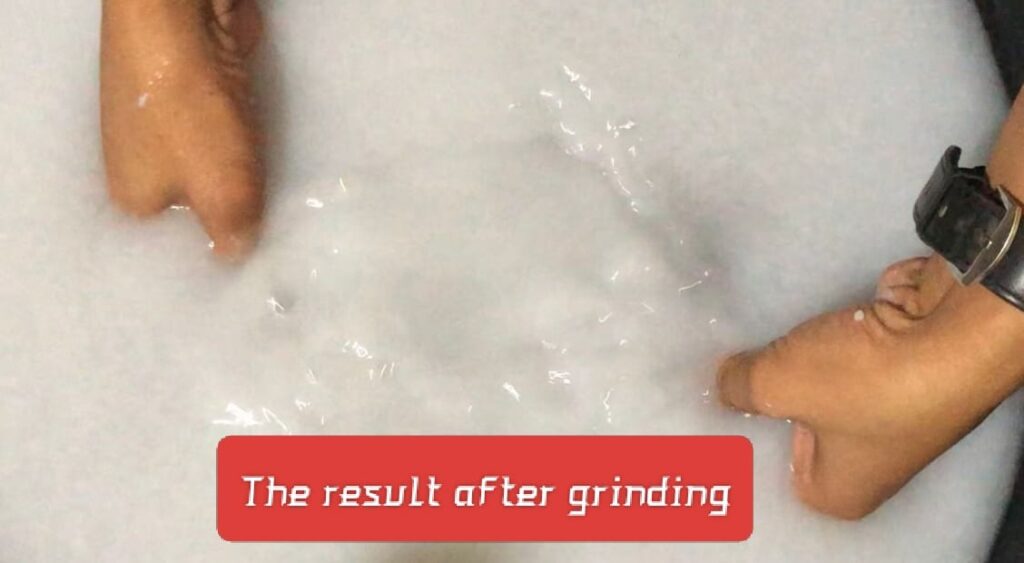
- Take the soaked paper and blend it with water until smooth
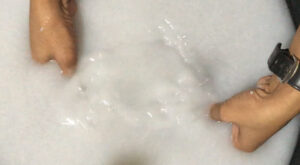
- Prepare a container for the crushed paper
- Take the melted paper, put it in the container, and add enough water
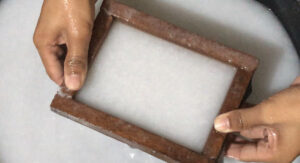
- Make a frame according to the size you need.
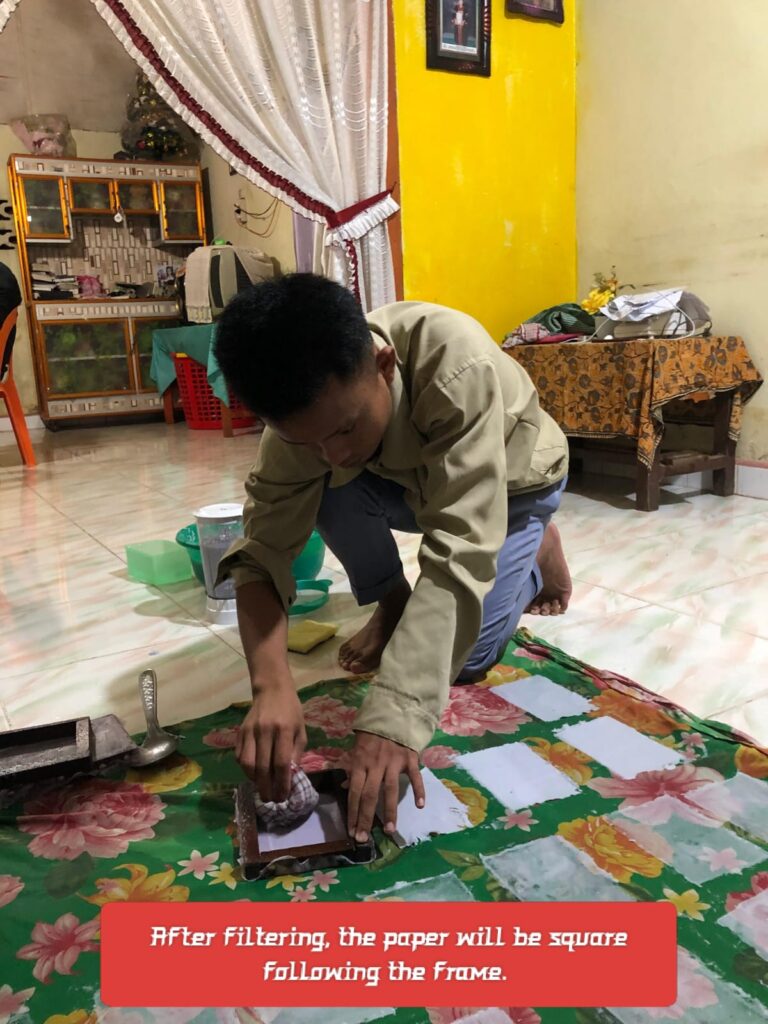
- Then print the paper using the frame.
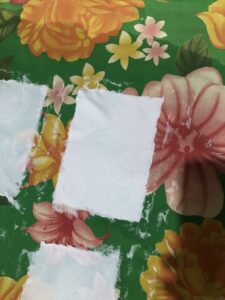
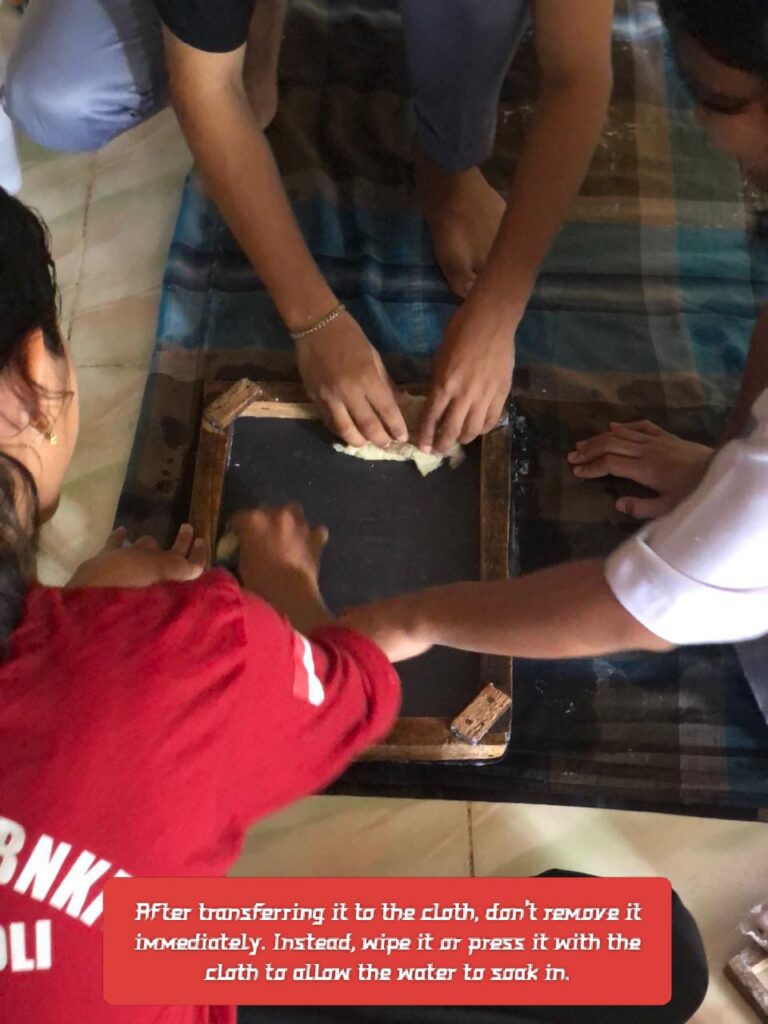
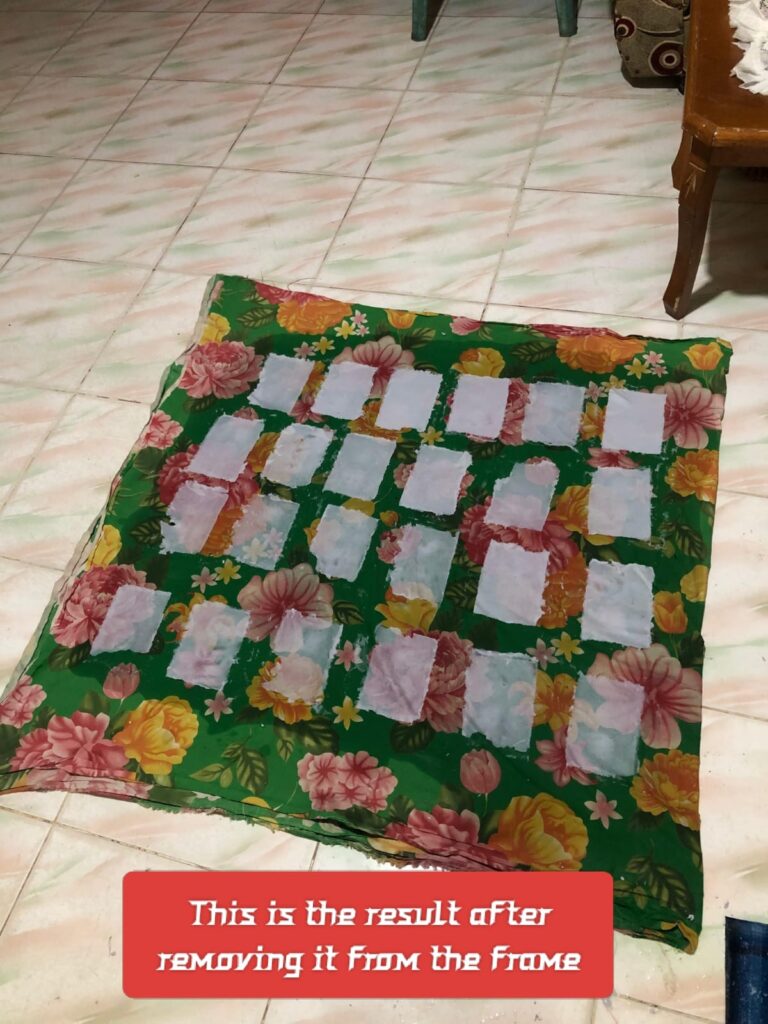
- After that, stick it on a piece of cloth and dry it in the sun or leave it in a room for about 2 days or until dry.
- Remove the dry paper from the cloth one by one.
- Repeat these steps continuously until the paper can be stacked into a book.
Book printing stage
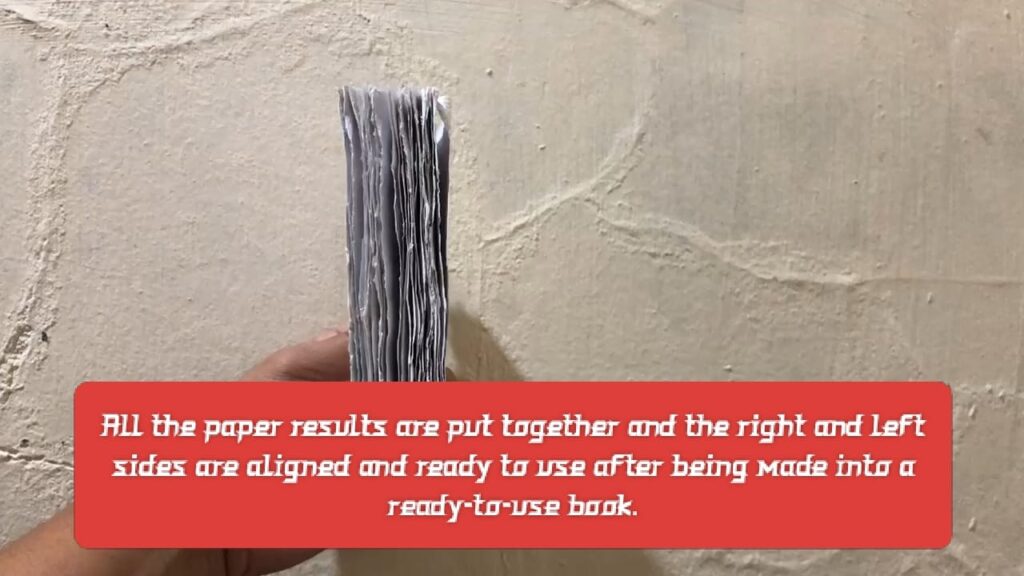
- Press the finished paper until it is flat and neat.
- Prepare used manila paper, buffalo paper, or cardboard that can be used.
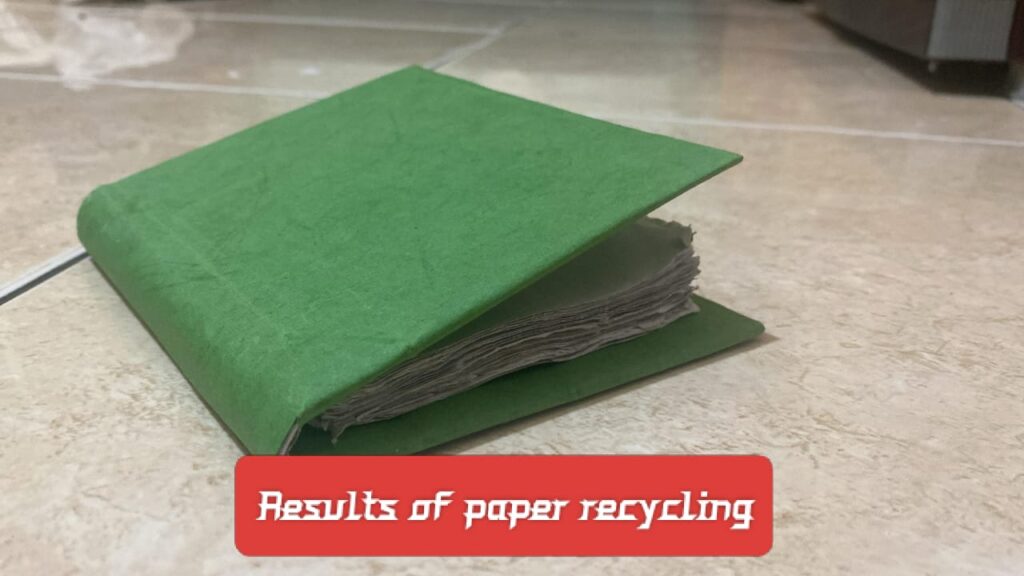
- Stick the cardboard to the dry paper to make a cover.
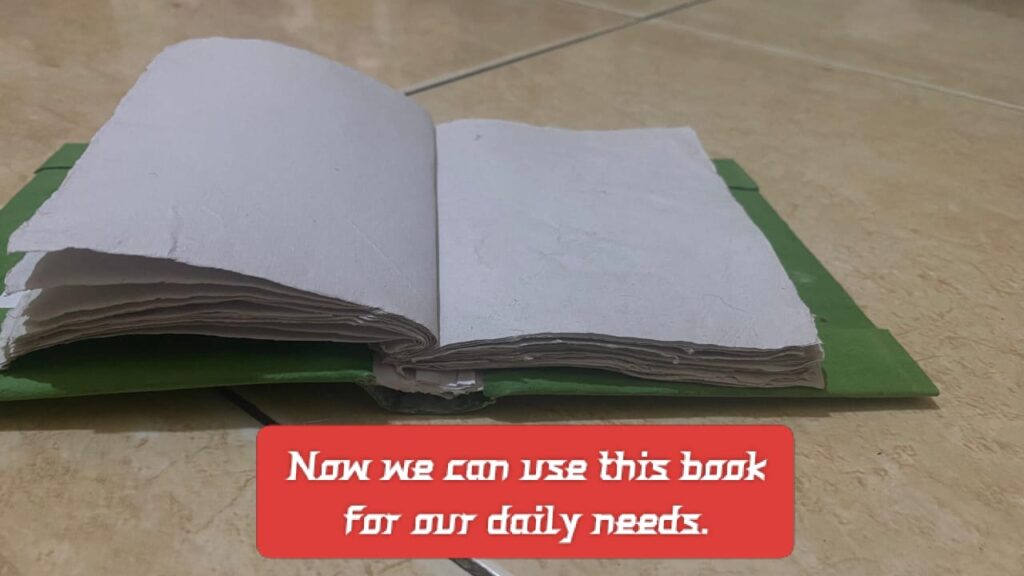
- Now you have recycled paper that can be used again for writing.
Obstacles
In the process, we experienced many obstacles in this experiment, including:
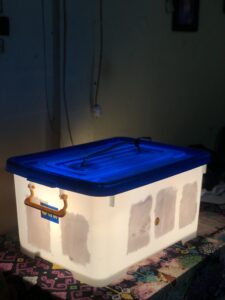
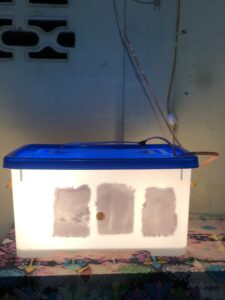
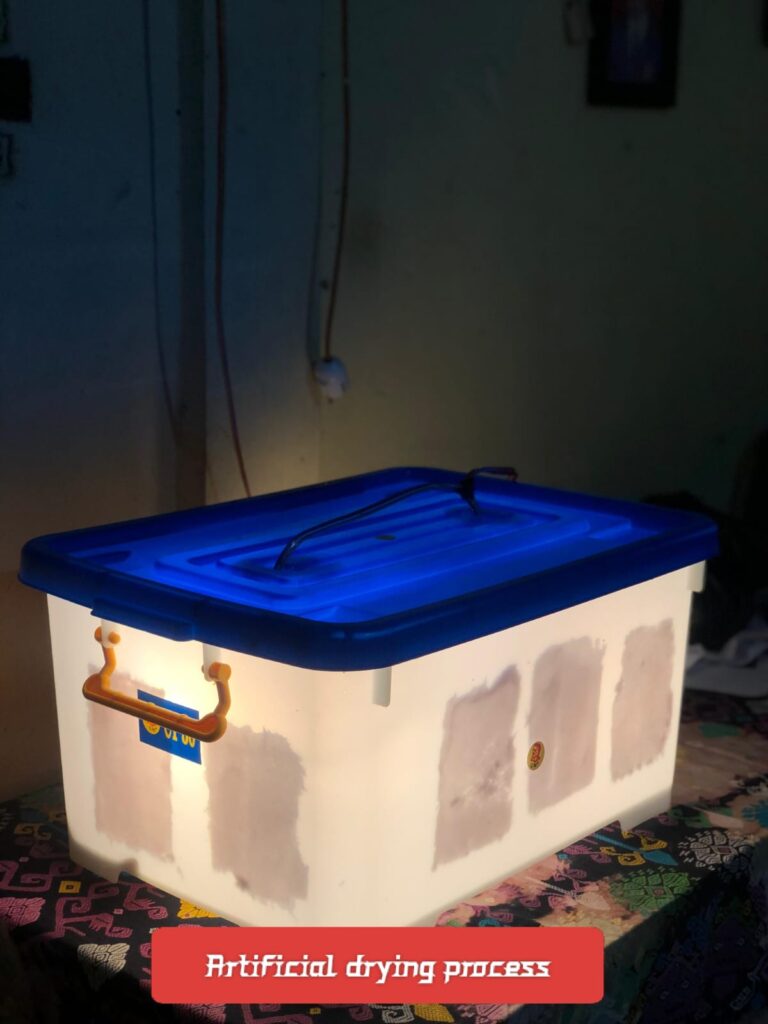
- The weather in Indonesia is currently rainy, which causes the paper to take a long time to dry. So we made a homemade paper drying container in a box by putting incandescent lights inside and leaving them on overnight. The next morning, we turned off the lights because the paper was dry (although only on one side). In the afternoon, the paper became wet again due to evaporation in the box. We concluded that this method was ineffective. Next, we dried the paper on a cloth, but it took more than a day to dry.
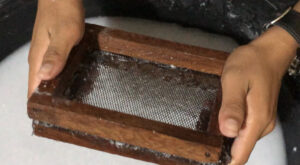
We removed one pair of wheels from the box to tilt it, so that dripping water would collect at the lower point of the box.
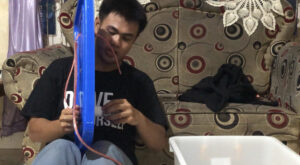
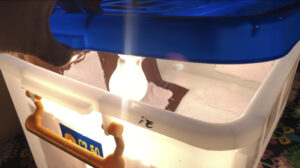

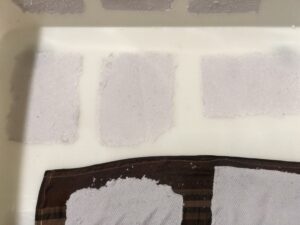
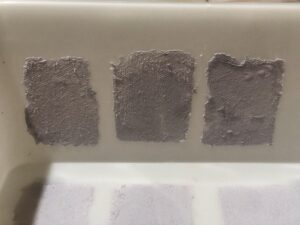
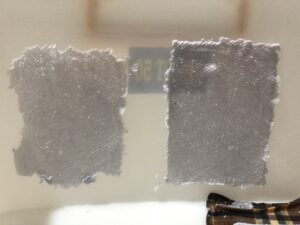

- We also encountered challenges with the paper filter. Some sheets of dried paper had a fairly rough texture on the surface.
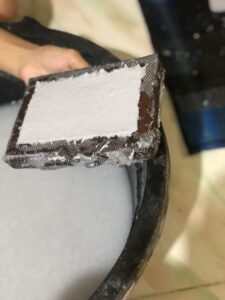
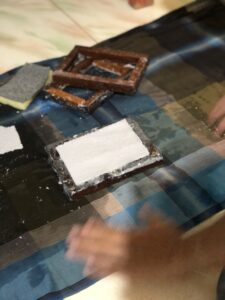
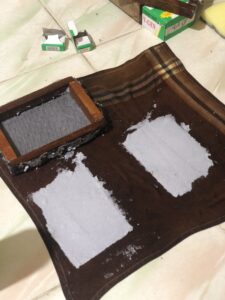
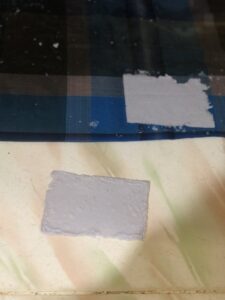
So we replaced the filter with a “hard tulle” cloth, and the result was that the dried paper was smoother than before. This made us happy.
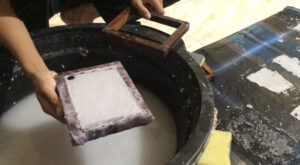
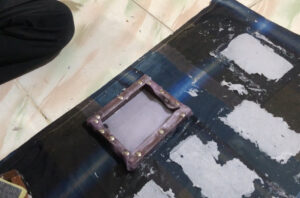
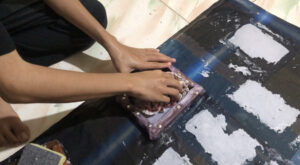
- Currently, we are encountering obstacles in the paper-pressing stage. The paper becomes sticky on the filter frame when poured onto the cloth surface, causing cracks on some sides of the paper and reducing its size.
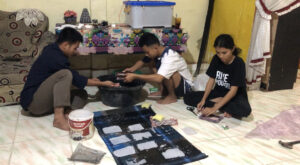
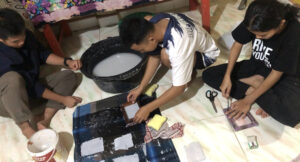
Despite all these obstacles, we remain optimistic that this project will be successful.
Reflection
Many failures made us feel pessimistic during the production and printing process. But that did not discouraged us from continuing to commit and work hard so that all of that effort would not be in vain. We succeeded in making a new book from used paper. And we are very proud of that achievement.
Motivation
To all my friends, never be ashamed to collect used items. Who knows, this could become a new source of income if you pursue it. Keep reminding and encouraging your family, relatives, friends, and loved ones to continue protecting and preserving the environment through simple things around us.
Authors
- Elen Six Juniar Martatini Lase
- Febsanti Srimonika Zebua
- Citra Jelita Lase
- Aprianus Telaumbanua
- Benedictus Lekmanju Ndraha
- Abdi Putra Bawamenewi
- Azwa Naufal Mahardika
- Rania Shafia Adrevi
- Ari Sukma Wulan
Coordinated by Mei Kristiani Ndruru (The Ambassador)
Gallery
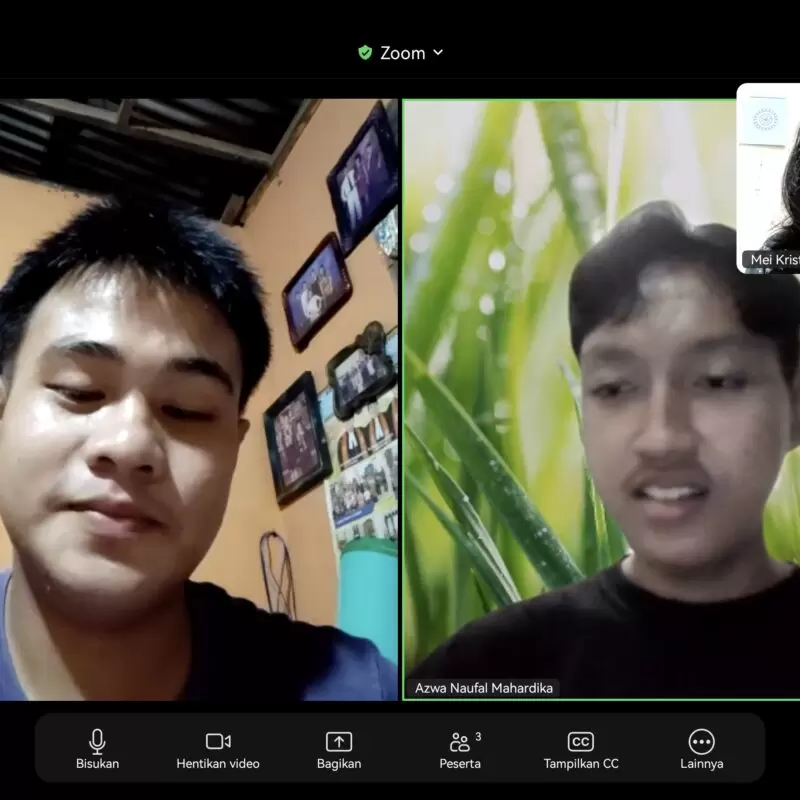
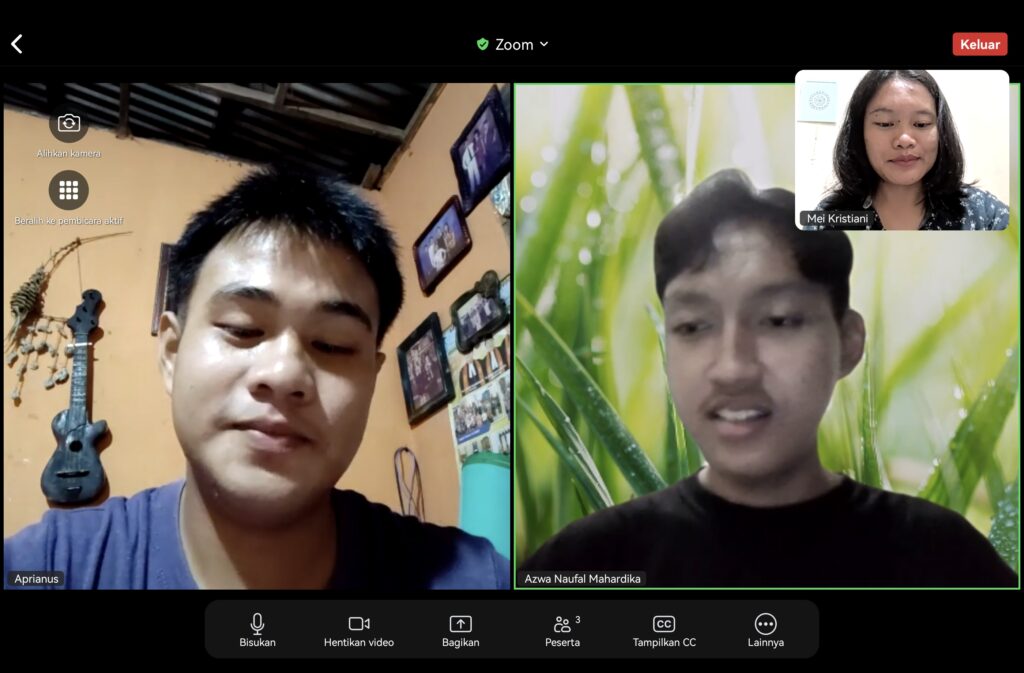
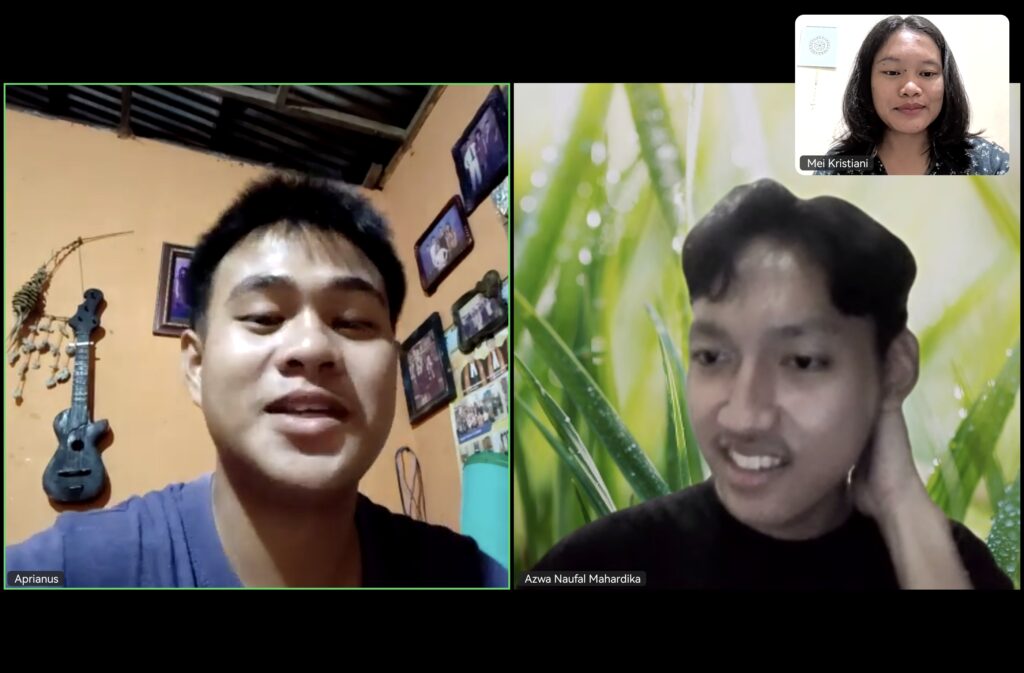
The team held an online meeting to trial the presentation before the conference.

Video documentation of this project can be viewed below.
☷ See the project teams here »
☵ Some words about the contributions »
☴ Our sponsors and partners » (the-horse.education)