
Electronic Clutch Control (ECC) systems are appearing more often in modern motorcycles and cars, and many professionals are curious about what they can actually offer.
In this article we examine the technical structure, functional mechanisms, and operational behaviour of electrical clutches. A short expert interview is included to provide practical insight and deepen the understanding of key concepts.
Interview with P. Keller
We spoke with a rider who regularly works under demanding conditions and recently tested a bike equipped with ECC. Below we summarised what we learned.
Where ECC helps most
Even after a short test, the rider immediately saw advantages in slow-speed riding and heavy traffic. These situations require constant clutch work, and ECC can take a big part of that load off the rider’s hands.
Feeling the Friction Point still Matters
Precision riding depends heavily on feeling the clutch’s friction point. The rider stressed, that while ECC might improve consistency, it must still feel natural. If the system becomes too digital or removes tactile feedback, it could reduce the level of control needed for tight or tactical manoeuvres.
Safety through less Stress
ECC can help prevent stalling and cut down on fatigue. With less mental and physical effort going into clutch handling, riders can focus more on what’s happening around them — something that’s especially valuable in emergency situations.
Concerns about Reliability
The rider’s main concern is system failure. Electronics can be affected by heat, vibration, moisture, or software issues. Without a reliable mechanical fallback, a malfunction could be dangerous. For ECC to gain trust, strong redundancies are essential.
Performance and Fatigue
In slow-speed operations and dense traffic, ECC could improve performance by making movement smoother and freeing up mental bandwidth. On long shifts, it could also significantly reduce hand fatigue, which is a real issue during repeated low-speed work.
Will ECC become standard?
It’s possible ECC will become standard within the next decade, but only if it proves itself reliable and easy to maintain. Professionals tend to be cautious, and trust has to be earned over time.
Automation with Limits
Features like automatic stop-and-go can be helpful, but only if a manual override is always available. The rider wants to be able to take control instantly if needed.
Custom Profiles and Hybrid Systems
Adjustable clutch profiles would be useful, especially those designed for low-speed stability or tactical tasks. Ultimately, the rider sees hybrid systems — electronic assistance combined with manual override — as the most practical and safest solution.
Full Interview in PDF: Interview-with-Pascal-Keller
Introduction to the technical part
Electrical clutches—often referred to as electromechanical or automatic clutches—are devices used to engage or disengage torque transmission within a drivetrain without direct manual mechanical input. Unlike traditional mechanical clutches, electrical clutches rely on electromagnetic fields, actuators, or integrated control systems to regulate clutch pressure and slip. This makes them particularly valuable in automated manual transmissions (AMTs), hybrid drivetrains, and modern industrial machinery. [1][2]
Basic Principles of Electrical Clutch Technology
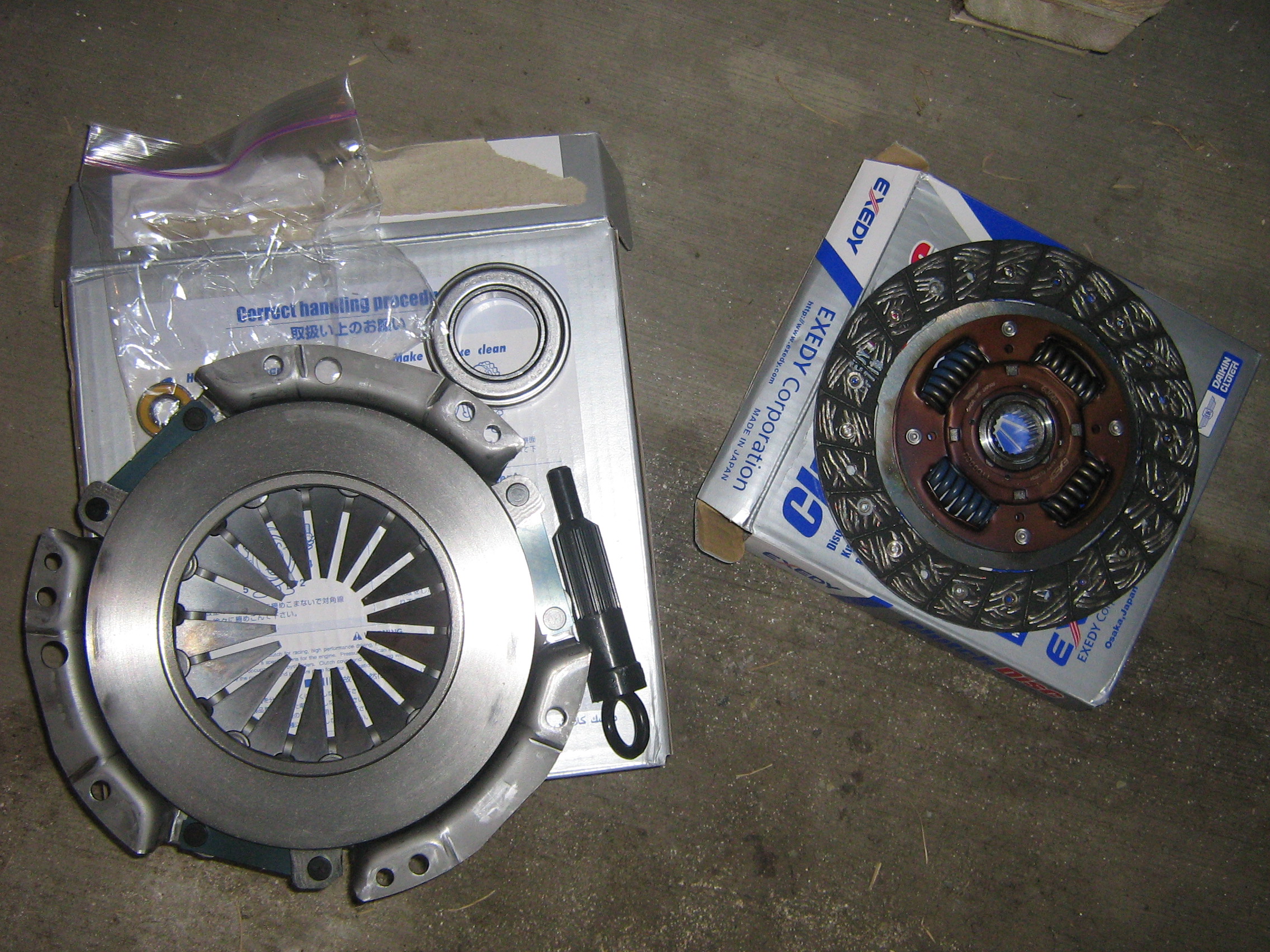
Electrical clutches operate based on a combination of electromagnetic force, electrical control signals, and sensor-based feedback loops. Electrical clutches generally contain the following core components:
Coil (Electromagnet)
Produces a magnetic field when current flows through it. This magnetic field creates a force that engages the clutch plates. Magnetic flux – the measure of the total magnetic field passing through a surface. Higher flux = stronger engagement force.
Armature Plate
A movable metal plate attracted by the electromagnet. When pulled in, it presses against the rotor plate to transmit torque.
Rotor
Connected to the driving shaft (e.g., motor output shaft). Rotates continuously as long as the motor runs.
Friction Material
Ensures smooth torque transfer and controlled slip. Similar to friction linings used in mechanical clutches.
Electronic Control Unit (ECU)
Regulates current flow to the clutch coil. Ensures smooth engagement, avoids jerks, and adjusts for load changes.
Closed-loop control system
The ECU uses sensor feedback (RPM, torque, pedal position) to automatically optimise clutch pressure.
Operating Principle of Electrical Clutches
Electromagnetic Engagement
When the ECU sends electrical current to the coil, a magnetic field is generated. This magnetic field attracts and pulls the armature plate towards the rotor. As the plates contact each other, torque is transferred from the driving side (motor) to the driven side (gearbox input shaft).
Disengagement
When the ECU stops the current flow, the magnetic field collapses, the armature plate is released by a return spring and no torque is transferred. This instantaneous and precise response makes electrical clutches ideal for systems where fast shifting or automated control is required.
Thermal Behaviour
Because electrical clutches involve heat-producing friction and electrical resistance, they often include cooling fins, thermal sensors and heat-resistant friction linings. Overheating reduces torque capacity and can demagnetise the coil over time. [3][5]
Applications of Electrical Clutches
Automated Manual Transmissions (AMT)
Used in many European and Asian compact cars. Allows paddle-shift or fully automatic shifting.
Hybrid Powertrains
Clutch used to decouple the combustion engine from the electric motor.
Other Applications
Industrial Machinery, Conveyor systems, Packaging machines, Robotic interfaces requiring precise positioning, Agricultural Machines, PTO (Power Take-Off) systems with automatic torque adjustment. [2][6]
Advantages and Disadvantages
Advantages
- High precision of engagement
- Fast response time
- Low maintenance compared to hydraulic clutches
- Easy integration with digital control systems
- Allows automation of manual transmissions
Disadvantages
- Requires stable electrical power supply
- Heat buildup can reduce efficiency
- Coil failure leads to complete clutch failure
- More expensive than purely mechanical systems
Conclusion
Electrical clutches play a central role in modern mechatronics and automotive systems. Their ability to engage and disengage torque using electromagnetic force and digital control makes them ideal for automated transmissions, hybrid drivetrains, and industrial automation. While challenges such as thermal management and cost remain, ongoing research continues to improve performance and durability.
Overall, electrical clutches combine mechanical robustness with electronic precision, making them a key technology in the future of automated mobility.
Authors
Maximillian Renner (BS Bülach)
Levin Reichmuth (BS Bülach)
(reviewed by Sivani & Jael)
Sources
- Bosch Automotive Handbook, 9th Edition, Bosch GmbH, 2019 (amazon.in)
- Müller, T. Elektromechanische Antriebssysteme, Springer Verlag, 2020 (springer.com)
- IEEE Powertrain Technology Review, Vol. 12, 2021 (ieexplore.ieee.org)
- SAE Clutch Control Systems Report, SAE International, 2022 (sae.org)
- Toyota Hybrid Drivetrain Technical Papers, 2020 (global.toyota)
- Industrial Mechatronics Review, Issue 4, 2021 (inderscience.com)
- Cover Image (freepik.com)
On-topic posts on dontwastemy.energy
☷ See the project teams here »
☵ Some words about the contributions »
☴ Our sponsors and partners » (the-horse.education)