
Where cultural heritages meet the world through Batik.
A global journey of patterns, stories, and shared creativity coming to life through the language of batik.
Why Heratlas?
Heratlas is born from a simple belief: cultures grow stronger when they are seen, heard, and connected. Around the world, every community carries motifs that hold meaning, symbols of origin, identity, memory, and hope. Heratlas maps these living traditions and invites them into thoughtful collaboration with Indonesian batik, not as decoration, but as dialogue.
In a landscape where cultural exchange often slides into appropriation, Heratlas offers a new model: intentional partnerships, consent-based design, and storytelling that honors its sources. Through co-created patterns, educational content, and limited collaborative collections, Heratlas becomes a meeting point— a place where artisans can share, protect, and evolve their heritage together.
Heratlas is not just a brand. It is a growing atlas of world craftsmanship. With Heratlas, folklores from your country can be collaborated with batik’s signature designs. Heratlas is where batik meets your culture.
Batik
Batik is a traditional textile art from Indonesia that uses wax-resist dyeing to create intricate patterns and symbolic motifs. Each region has its own visual language. Batik is more than a technique; it is a cultural archive. Every line in every motif has meaning, they become an identity that has been passed down across generations. Today, batik continues to evolve as artisans blend time-honored processes with contemporary ideas, keeping the tradition alive, relevant, and globally appreciated.


First Project : Switzerland-Inspired Batik
Heratlas will start to make a batik design that is inspired by Switzerland’s folklore, famous flower, and their famous Mountain. We believe that with THE HORSE, we can make it happen.
We have brief explanation on what inspired us, you can read it down below.
Switzerland Folklore : Tatzelwurm
The Tatzelwurm is a legendary creature from the folklore of Switzerland’s mountain regions, often described as a large snake-like being with short legs and sharp, glinting eyes lurking behind the Alpine mist. Its story may sound strange and mysterious, but that is exactly what makes it captivating, because the Tatzelwurm is more than just a monster. It represents the untamed, unpredictable side of nature hidden beneath Switzerland’s serene mountain beauty.
This legend carries a quiet philosophical message, that humans must accept that not everything in the world is meant to be fully understood. Some mysteries are meant to remain as they are, reminding us to stay humble, stay curious, and to recognize that the world is far larger and far more wondrous than what we can see on the surface.

Switzerland’s Most Iconic Mountain : Matterhorn
The Matterhorn is Switzerland’s most iconic mountain. Its sharp, pyramid-like peak is instantly recognizable and rises dramatically above the Alps. Beyond its breathtaking beauty, the mountain symbolizes strength, endurance and the spirit of exploration—values deeply embedded in Swiss identity.
The Matterhorn’s symmetrical shape and striking silhouette have made it a global cultural icon, appearing in art, design and international branding. In our project, the Matterhorn serves as a powerful visual element that blends seamlessly with Indonesian batik aesthetics, fusing Swiss natural heritage with traditional craftsmanship.

Switzerland’s Famous Beauty : The Edelweiss
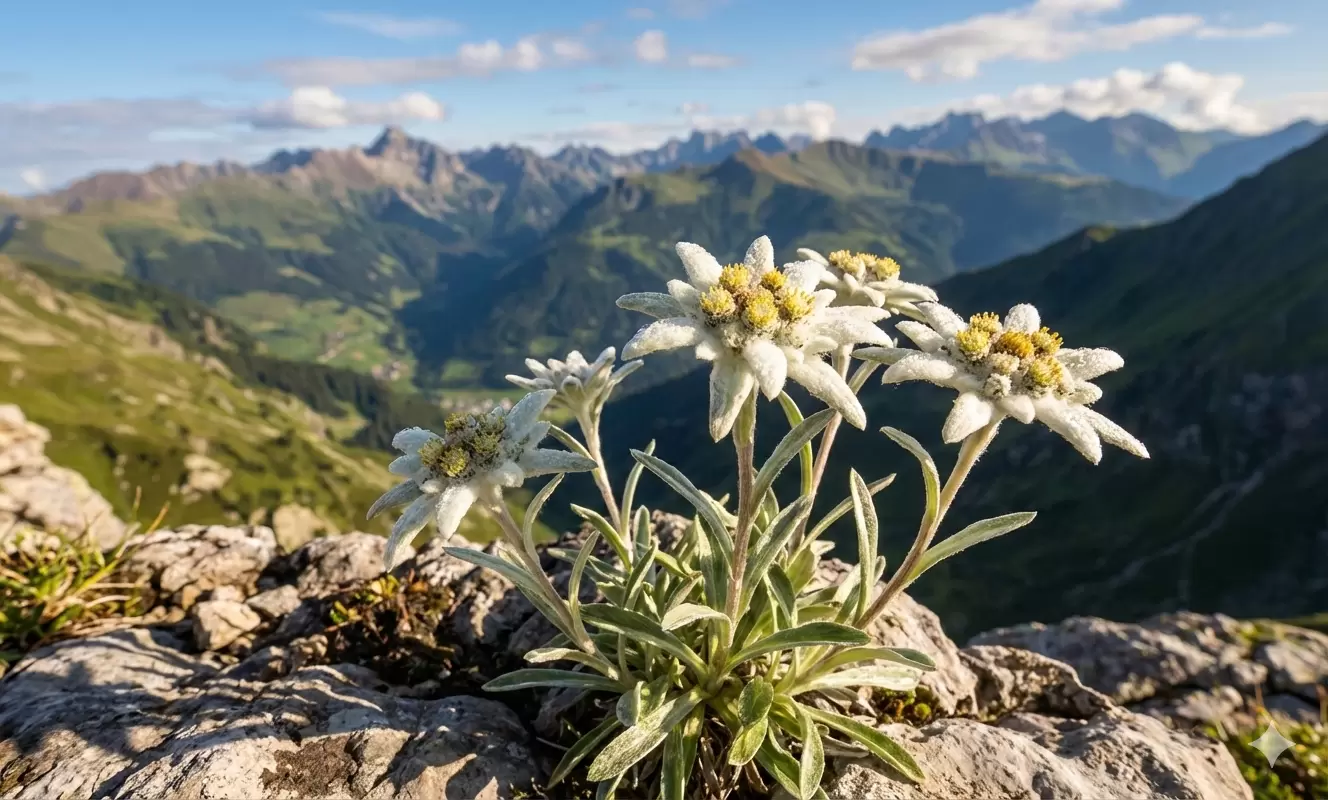
Edelweiss is one of Switzerland’s most iconic natural symbols, known as “beauty born of resilience.” This small white flower grows high in the Alps, in extremely harsh, snowy, rocky environments. Its uniqueness lies in its ability to survive in conditions that are nearly impossible for other plants, making it a symbol of courage, purity, and fortitude.
In addition to being considered a natural charm of Switzerland, edelweiss also has strong cultural value, even becoming a symbol of love and protection in various Alpine traditions. Its rarity makes it revered as a true beauty that can only be found through struggle.
Indonesia’s Iconic Motifs
After exploring the stories, symbols, and natural beauty of Switzerland, our journey returns home to Indonesia. This is where the collaboration finds its balance, because batik grows from Indonesian identity and everyday culture. To understand this part of the project, we look at the traditions that shape us, especially those found in Jakarta and the Betawi community around Setu Babakan, an important cultural heritage area close to our university.
Betawi culture keeps many old practices alive through daily life and traditional crafts. These habits and symbols influence how people celebrate, welcome guests, and express community values. From this environment, we draw motifs that carry both meaning and familiarity.
For the batik design, we include kakatua, an Indonesian endemic bird that is now endangered, reminding us of the beauty of nature and the need to protect it. Bunga manggar or kembang kelapa often appears in celebrations and represents joy and growth. Melati gambir is known for its fragrance and purity and is used in Betawi wedding traditions. Sirih kuning connects to the long-standing habit of offering betel leaves as a gesture of respect. Kembang goyang, a sweet Betawi snack with a flower shape, brings a touch of playfulness and comfort. Flamboyan adds a vibrant touch inspired by the bright red flowers found in many parts of Jakarta.
Together, these motifs offer a warm expression of Indonesian heritage. When placed alongside Switzerland’s legends and landscapes, they create a meaningful dialogue between two cultures, showing how different traditions can connect, respect each other, and grow through shared creative work.


Reflection
This bootcamp had been a new experience to us, since for the majority of our team members, this was our first international conference experience that included a team project centered on multicultural exchange. It was quite challenging since we had multiple projects that needed to be conducted simultaneously, but regardless, we truly appreciate all the new connections, opportunities, and experiences that we gathered here in THE HORSE (the-horse.education) Intercultural Collaboration.
Beyond the academic components, this project pushed us to step outside our comfort zones and interact with people whose cultural backgrounds, communication styles, and ways of thinking were very different from our own. Working in a multicultural setting required us to adapt, listen more intentionally, and become more aware of the assumptions we unconsciously bring into teamwork. At times, the differences created misunderstandings, but these moments ultimately helped us grow.
We learned that diversity is not only about representation but also about how individuals learn to collaborate across perspectives.
Authors
Dimas Yusuf Ariobimo
Lunari Galuh Manohara
Jonita Carol Suripatty
Rachel Audindra Hidayat
Muhamad Agung Idha
Citra Sari
Jael Locher
(reviewed by Sol Facal)
Sources
Pictures
- Tatzelwurm (cryptidz.fandom.com)
- Matterhorn
- Edelweiss (iamexpat.ch)
- Kakatua jambul jingga (istockphoto.com)
- Melati gambir (seedsforgarden.com)
- Sirih Kuning (stkipmb.ac.id)
- Kembang goyang (porosjakarta.com)
- Flamboyant tree (threebouquets.com)
- Bunga Manggar (senibudayabetawi.com)
Note: To ensure copyright compliance, some of the illustrative images used in this project draft were generated using Artificial Intelligence tools (Google Gemini and ChatGPT).
On-topic posts on dontwastemy.energy
☷ See the project teams here »
☵ Some words about the contributions »
☴ Our sponsors and partners » (the-horse.education)
this project is really amazing and i really like it, i hope it will give you a lot of lessons
What a beautifully thoughtful project! . I’m genuinely inspired by how Heratlas creates a meaningful dialogue between cultures through batik—honoring traditions while inviting genuine collaboration across continents. The way the Swiss folklore, Matterhorn symbolism, and edelweiss resilience are woven together with rich Indonesian Batik motifs reflects deep respect and creativity.
This isn’t just an intercultural design exercise—it’s a celebration of shared heritage, mutual learning, and artisanal wisdom. The emphasis on consent-based co-creation and storytelling sets a powerful example for how cultural exchange should be done: with curiosity, humility, and respect.
Huge congratulations to the team for capturing such a beautifully balanced vision of art, identity, and collaboration. Looking forward to seeing where this intercultural journey leads next!