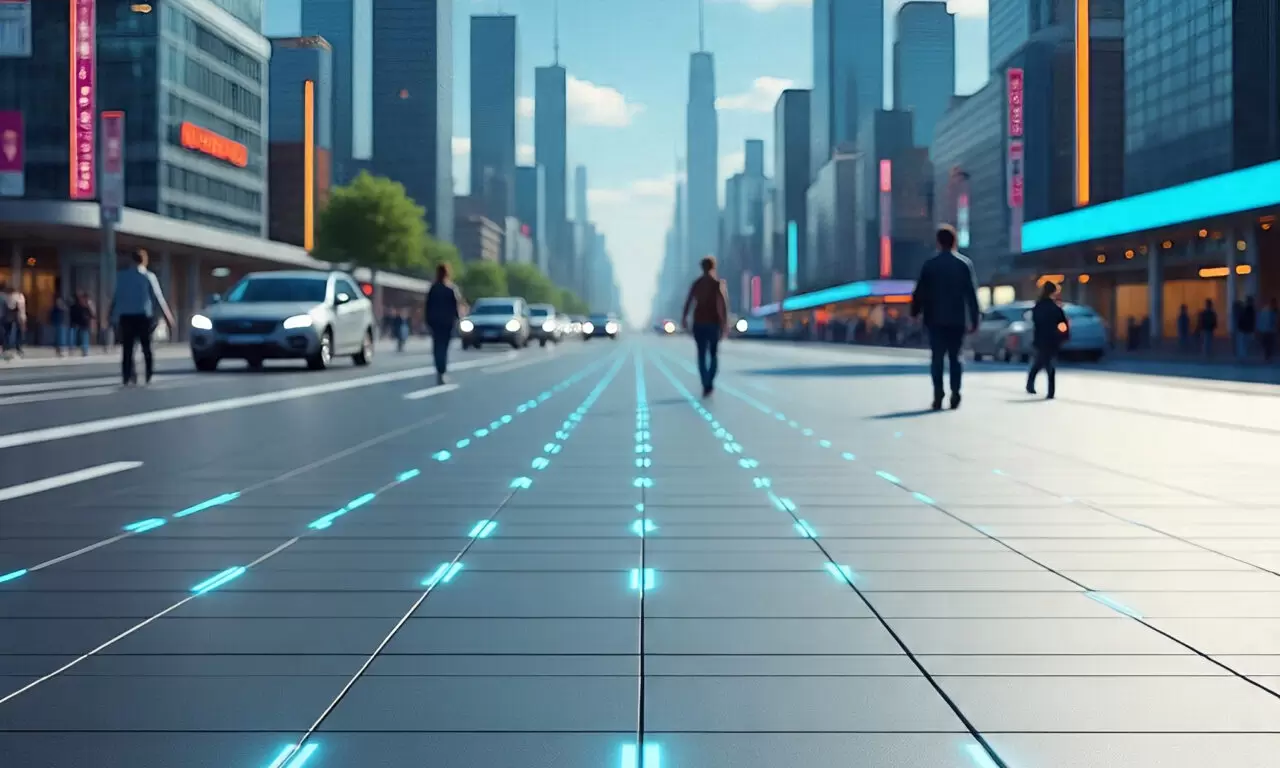
Imagine you can create electricity from just walking! This is possible by using piezoelectric floor tiles in crowded places.
We were curious about using piezoelectric floor tiles as an extra source of electricity in India. So, we explored how these tiles work, their advantages and disadvantages, and where they could be used in the Indian context. We also spoke briefly with a scientist to understand his point of view. We hope you enjoy reading the article!
The use of piezoelectric tiles in India
Technical background
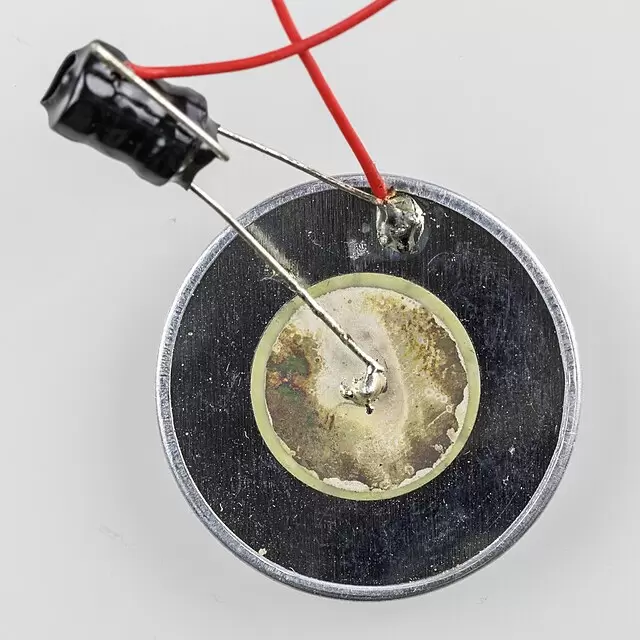
The tiles consist of piezoelectric materials, most commonly crystals, which produce electricity when pressure is applied on them. This is called the piezoelectric effect, where mechanical energy is converted into electrical energy. The piezoelectric material is usually formed into discs, plates or thin films. [1]
Advantages and Disadvantages
Some of the advantages of the piezoelectric tiles are:
- Generates energy
- Works from everyday movement
- Low maintenance
- Increases energy awareness
- Can power small devices
- Space-efficient (can be installed in floors without taking much space)
Some of the disadvantages are:
- Low power output
- High installation cost
- Needs high foot traffic
- Energy loss during conversion
- Durability and Sustainability concerns
- Not suitable for powering large systems
Media
Here is a video to help you understand the working of piezoelectric tiles in detail. (youtube.com)
Interview
We had a small interview with Prof. Dr. Ashok Kumar Veeramutthu (saveetha.com), a renowned scientist for his work on waste management and renewable energy at Saveetha Institute of Medical and Technical Sciences, India. Below you can find the questions and a description of the answers.
What is your take on piezoelectric tiles? How do you think they could impact the future of India?
He personally thinks that, as of right now, piezoelectric tiles are a much more environmentally stable alternative. He commented that although wind energy is cleaner, Piezoelectric tiles can be seen as a step into the future.
He also remarked that it is not something to be installed everywhere, only in areas with high foot traffic. As of now, the future of India with piezoelectric tiles is unclear, as the number of projects related to piezoelectric tiles is very limited. He added that Mumbai would be an excellent place to start such projects as there is extremely high foot traffic, which would help decrease the pollution problems faced there.
Do you think piezoelectric tiles could decrease the amount of waste in the world?
There are quite a few wasteful power plants. A good example of this would be a thermal power plant. The main waste in this power plant is heated water discharged into rivers, possibly causing disturbance in the eco system. Another example is a nuclear power plant.
Although the amount of power generated by nuclear power plants is irreplaceable, piezoelectric tiles could help reduce the number of nuclear power plants by at least one, although he does remark with the low energy rate produced by piezoelectric tiles, replacing nuclear power plants does seem like a distant future.
This was a short but very informative interview. Though we wished we had more time, Dr. Veeramutthu was on a tight schedule.
Reflection
We have realised the importance of energy, and that conserving energy and finding new ways to produce energy is a necessity when it comes to ensuring a successful future for humanity as a whole. It is important to spread this knowledge and inspire others to do the same. Mainly we have come upon the technology of piezoelectric tiles, learning more about them and their use cases and their disadvantages.
Authors
Arnav PL
Vasudev Ajith
Dhwani SR
(reviewed by Jael Locher)
Sources
Piezoelectric effect (wordpress.com)
Interview with Prof. Dr. Veeramuthu
Who is Dr Ashokkumar Veeramuthu? (indiatimes.com)
© Raimond Spekking / CC BY-SA 4.0 (via Wikimedia Commons)
On topic posts dontwastemy.energy
☷ See the project teams here »
☵ Some words about the contributions »
☴ Our sponsors and partners » (the-horse.education)
Innovative and wonderful idea.